Blog
Honey: Types, Uses, Benefits and How to Choose Quality

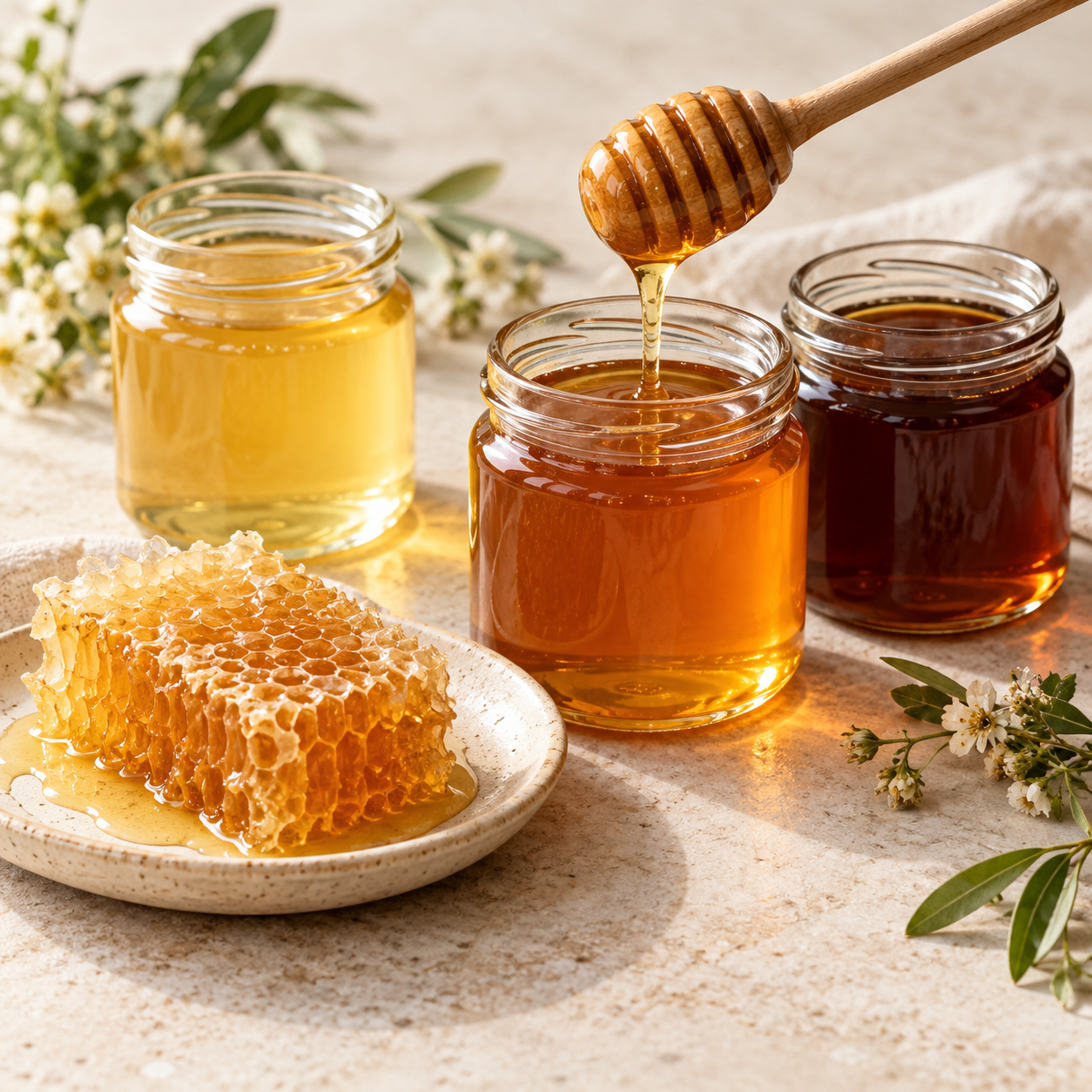
A good jar of honey can bring floral sweetness to dahi, soften a sharp lemon dressing, or add flavour to a simple breakfast. Choosing one becomes easier when you understand the different types of honey and what a label can actually tell you.
This guide focuses on food, flavour and sensible buying decisions. Honey can be enjoyable within a varied diet, but “natural” does not mean sugar-free, and a premium name is not proof of a medical benefit.
What is honey, and how do bees produce it?
Honey is a sweet substance made by honey bees, usually from flower nectar. Bees collect nectar, bring it to the hive and process it with enzymes. As water is removed, the liquid becomes more concentrated. Bees store the resulting honey in wax cells, which can be capped when the honey has matured.
Flowers, location and season influence the finished food. That is why two genuine honeys can differ in colour, aroma, thickness and flavour. The Food Standards Agency’s overview of honey explains the distinction between honey’s natural origins and the compositional standards used to assess it.
Common types of honey: what the names mean
Floral-source honey
Names such as Sidr, acacia or clover describe a claimed principal floral source. Sidr is also commonly known as Beri in Pakistan. A floral name describes origin; it does not establish purity, a specific nutrient content or superiority for treating illness.
Golden Herbs lists Sidr Honey (Beri). Check the current label and ask about origin if that matters to your purchase. Acacia and clover are general examples here, not claims about Golden Herbs stock.
Multifloral honey
Multifloral honey comes from a range of flower sources. Its taste can change between harvests. A less specific floral name need not make it an inferior kitchen ingredient: choose a flavour you enjoy and information you can verify.
Raw, filtered and creamed honey
Processing descriptions answer a different question from floral names. Filtering removes particles; heating can make handling and bottling easier. “Raw” usually signals limited processing, but ask the producer what the term means in practice. Creamed honey has a deliberately fine crystalline texture that makes spreading easier; it is not necessarily honey with cream added.
Honey blends
A blend combines honey with another ingredient. Golden Herbs’ Cinnamon Honey page describes honey with Ceylon cinnamon. Its Dates & Ajwa Honey Blend combines honey and date paste. These are different foods from a single-ingredient honey, so compare their complete labels rather than treating them as interchangeable.
Honey benefits: useful food qualities without exaggerated promises
Honey offers sweetness, aroma and a convenient source of carbohydrate. In cooking, a small amount can balance sourness or bitterness and help a dressing coat ingredients. Those practical qualities are good reasons to buy it.
Honey contains small amounts of naturally occurring compounds, but an everyday serving should not be treated as a vitamin supplement. Eating honey is not a cure for diabetes, PCOS, infertility or any other medical condition. Evidence about specialised medical products cannot automatically be applied to a kitchen jar.
Honey versus refined sugar
Honey contains mainly glucose and fructose, along with water. Table sugar is mainly sucrose. Both contribute sugar and energy; neither supplies the fibre and broader nutrition of a balanced meal. Honey’s flavour may let you enjoy a smaller amount, but that depends on how you use it.
The World Health Organization includes sugars in honey among free sugars. Replacing every spoon of sugar with a generous pour of honey does not remove the need to moderate sweeteners. Compare measured portions rather than assuming equal spoonfuls have identical weight or nutrition.
If you manage diabetes, count honey within your carbohydrate plan and follow personalised advice. A honey-and-spice combination does not cancel out the honey’s sugar.
Easy ways to use honey in everyday meals
- Breakfast: add a small drizzle to plain dahi and fruit, then taste before adding more.
- Porridge or dalia: use honey as the sweetener instead of adding it on top of an already sweetened bowl.
- Savoury dressing: whisk a little honey into lemon juice and a food-grade cooking oil; season to taste.
- Roti or toast: spread thinly and serve with another food that provides protein.
- Drinks: stir into a comfortably warm drink if you enjoy the flavour. There is no need to turn it into a compulsory morning ritual.
For baking, start with a recipe written for honey. Its liquid content and flavour mean a direct swap for granulated sugar may change the result. Keep the first batch small before adapting a family favourite.
How to choose quality honey
Start with traceability and clear information. A sensible shopping checklist is more useful than a dramatic home test:
- Read whether the product is honey alone or a blend.
- Look for an identifiable seller, intact packaging and readable storage instructions.
- Check any origin or floral-source statement, and ask what supports it.
- If laboratory testing is claimed, ask for a relevant report linked to the product or batch.
- Compare pack sizes and ingredients before comparing prices.
Water, flame, thumb and tissue tests do not establish authenticity. The Food Standards Agency describes honey authentication as a technical challenge involving analytical methods and supply-chain information. Colour or thickness alone cannot prove purity.
Storage and crystallisation
Keep plain honey tightly closed in a dry cupboard, away from direct sun and the heat of a stove. Use a clean, dry spoon and avoid adding water to the jar. Follow the label’s storage and best-before guidance; blends may require different handling.
Graininess is often crystallisation, a natural change in texture. The University of Minnesota Bee Lab explains that sugar composition affects how quickly this happens. Crystals are not proof of adulteration, and staying liquid is not proof of purity.
If you prefer a runnier texture, gently warm a suitable closed container in warm water, keeping water out of the honey. Avoid aggressive heating. Unusual fermentation, leakage or contamination is a separate concern: do not assume every change is harmless crystallisation.
Frequently asked questions
Can babies have honey?
No. Never give honey to infants under 12 months, including in food or drinks. The CDC warns that honey can cause infant botulism.
Is darker honey always better?
No. Colour is one characteristic, not a universal quality ranking. Choose based on flavour, intended use, labelling and credible sourcing information.
Does crystallised honey mean sugar was added?
No. Genuine honey can crystallise. Texture alone cannot confirm either authenticity or adulteration.
Is honey with dates sugar-free?
No. A blend can contain ingredients you enjoy while still contributing substantial sugars. Read the label and use a measured portion.
Choose honey for the way you actually eat
Begin with one jar suited to your meals, use it sparingly and store it well. Browse the Golden Herbs honey collection for current options, and use the Golden Herbs contact page for product-specific questions. Clear information matters more than a miracle claim.
Learn, Explore, Heal Naturally.