Blog
Mixed Seeds: Nutrition, Benefits and Easy Everyday Uses

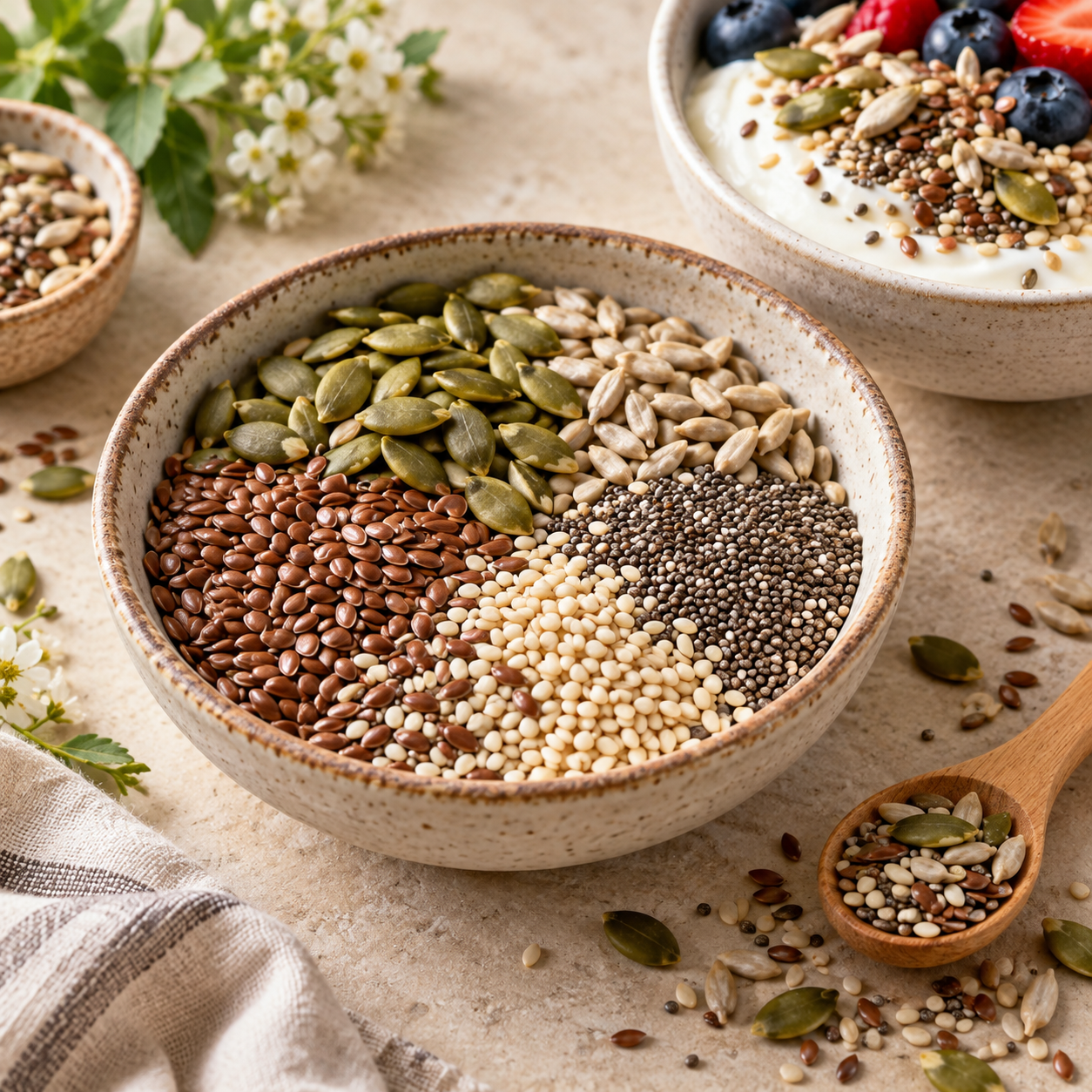
A spoonful of seeds is an easy way to change the texture and variety of a meal. Mixed seeds can bring crunch to a salad, while ground flax or hydrated chia works better in softer foods. The most useful choice is the one you can prepare comfortably and enjoy regularly.
This guide compares everyday edible seeds, explains what a blend can and cannot promise, and offers ideas for familiar meals such as dahi, dalia and chana salad. No seed mixture replaces a varied diet or prescribed treatment.
What are mixed seeds?
Mixed seeds are two or more edible seeds sold or combined together. Some mixtures contain only seeds; others include nuts, dried fruit, salt, sweeteners or flavourings. There is no single standard recipe, so the ingredient list matters more than the name on the front.
Golden Herbs lists both Golden Herbs Mixed Seeds and Seeds Superfood Mix. The online text does not provide a complete, detailed formulation for both products. Confirm the current pack’s ingredients, preparation directions and allergen statement before choosing, especially if you need to avoid a particular seed.
How common edible seeds differ
Seeds contribute different combinations of fibre, protein, unsaturated fats and minerals. Their exact nutrition depends on the seed, portion and whether it is whole, hulled or prepared with other ingredients. Values for one seed should not be presented as the nutrition of an unspecified blend.
Chia seeds: useful for moist dishes
Chia provides fibre, plant omega-3 fat and some protein and calcium. It absorbs liquid and forms a gel, which suits puddings and moist breakfast bowls. Harvard’s Nutrition Source guide to chia also stresses that a “superfood” does not replace an overall healthy dietary pattern.
Golden Herbs sells Chia Seeds. Follow preparation instructions and let them hydrate in sufficient liquid before eating. Do not swallow a dry spoonful followed by water, especially if swallowing is difficult.
Flax seeds, or alsi: helpful when ground
Flax provides fibre and the plant omega-3 fat alpha-linolenic acid. Grinding makes the seed’s contents more accessible than leaving its tough outer shell intact. Add a little ground flax to porridge, dahi or a suitable baking recipe.
For a single-seed option, see Flax Seeds (Alsi). If the pack contains whole seeds, grind only what you can use promptly and keep the rest protected from heat and moisture.
Pumpkin seeds: a savoury topping
Pumpkin seeds contribute protein, fat and minerals including zinc. Their larger size makes them useful for salads and vegetable dishes. Check whether you are buying edible kernels or seeds with shells, because texture and preparation differ.
Golden Herbs lists Pumpkin Seeds (Kaddu ke Beej). Read the product label for the form supplied and whether preparation is required.
Sunflower and sesame seeds
Sunflower seeds contribute vitamin E and unsaturated fats; sesame supplies fat, some protein and minerals. Both work as garnishes. They are included here as common culinary examples, not as confirmed individual Golden Herbs listings.
The Cleveland Clinic overview of edible seeds compares these foods and discusses practical uses. Nutrient variety is a more sensible goal than declaring one seed the winner for everyone.
Individual seeds or a mixed-seed blend?
Choose individual seeds when you want control over ingredients or a particular cooking result. Chia’s thickening action, ground flax’s fine texture and pumpkin seeds’ crunch serve different purposes. One packet of a familiar seed may be more useful than a large blend you rarely open.
A ready-made mixture can be convenient when its ingredients suit you. It reduces the number of packets to store and makes a varied topping easy. However, a blend does not automatically contain meaningful quantities of every nutrient advertised for its separate ingredients.
- For a smooth breakfast: consider hydrated chia or finely ground flax.
- For crunch: choose suitable ready-to-eat kernels or a blend prepared as directed.
- For dietary restrictions: prioritise a complete ingredient and cross-contact statement.
- For a small household: buy a quantity you can finish while fresh.
Five practical ways to eat seeds
1. Dahi, fruit and seeds
Start with plain dahi and chopped seasonal fruit. Add a small amount of an appropriate seed topping. Use hydrated chia or ground flax for a softer texture; add crunchy seeds just before serving so they do not soften during storage.
2. Dalia or oats
Prepare your usual breakfast, then stir in ground flax or add a prepared mixed-seed topping. Taste before adding sweeteners. This changes an existing meal without requiring a separate “wellness” recipe or an expensive list of extras.
3. A balanced smoothie
Blend fruit with milk, plain yoghurt or an appropriate alternative, then add a modest amount of ground flax or pre-hydrated chia. Seeds thicken a drink, so adjust the liquid. Avoid layering fruit juice, honey and sweetened yoghurt simply because seeds are included.
4. Chana and vegetable salad
Combine cooked chickpeas, chopped cucumber, tomato and lemon juice. Add a suitable crunchy seed topping immediately before eating. Keep cooked chickpeas and chopped ingredients refrigerated until needed; a dry topping does not make a prepared salad shelf-stable.
5. Homemade snack portions
Combine ready-to-eat seeds with ingredients your household already uses, checking every allergen. Portion into small containers. If making oat bites or bars, remember that dates, honey or syrup still contribute sugars; a homemade snack is not automatically low-sugar.
Portion awareness and digestive comfort
Seeds are concentrated foods, so a modest topping is often enough for a meal. A teaspoon can be a practical starting addition for someone new to seeds, rather than a target everyone must meet. Follow the pack and your individual needs.
Increase fibre gradually and drink normally throughout the day. Large sudden changes can be uncomfortable. If you have a prescribed low-fibre diet, digestive disease, swallowing difficulty or a condition requiring mineral restrictions, ask your clinician or dietitian how seeds fit your plan.
Allergies and label checks
Sesame can cause serious allergic reactions, as highlighted by the FDA’s sesame allergen guidance. Other seeds can also cause allergies. A mixture may share production equipment with nuts, peanuts or other allergens even when those ingredients are not obvious in its name.
Do not assume “natural,” “vegan” or “gluten-free ingredients” means suitable for every allergy or coeliac disease. Ask about manufacturing controls where necessary. For young children, seek age-appropriate preparation guidance: hard seeds and kernels can present a choking concern.
Keeping seeds fresh in a warm kitchen
Store seeds in a tightly closed container away from light, steam and the stove. Keep the original label or record its instructions before transferring the contents. Ground seeds deserve particular attention because more surface area is exposed to air.
Follow refrigeration guidance on the pack, particularly after opening or grinding. Use clean, dry utensils. Discard seeds that smell rancid, show mould or contain insects; toasting is not a way to rescue spoiled food. Hydrated chia and seed dishes with dairy or fruit belong in the refrigerator, not the dry pantry.
Frequently asked questions
Can mixed seeds be eaten every day?
They can fit an everyday diet when the ingredients, portion and preparation suit you. There is no requirement to eat them daily or use a large serving.
Must every seed be soaked?
No. Preparation depends on the seed and recipe. Chia needs sufficient moisture; flax is useful ground. Follow the specific product’s directions instead of soaking every blend automatically.
Are chia and takhm balanga the same?
No. Chia and basil seeds are different seeds. Golden Herbs lists Basil Seeds (Takhm Balanga) separately; do not assume the names or preparation instructions are interchangeable.
Do mixed seeds guarantee weight loss or hormone balance?
No. Their role is nutritional and culinary. They are not established treatments for PCOS, infertility or weight problems.
Start with one useful habit
Choose a seed or clearly labelled blend that fits a meal you already enjoy. Explore the Seeds & Superfoods collection, and ask Golden Herbs for ingredient details whenever a label leaves a question unanswered.
Learn, Explore, Heal Naturally.