

Blog
Ashwagandha: Research, Traditional Uses and Safety

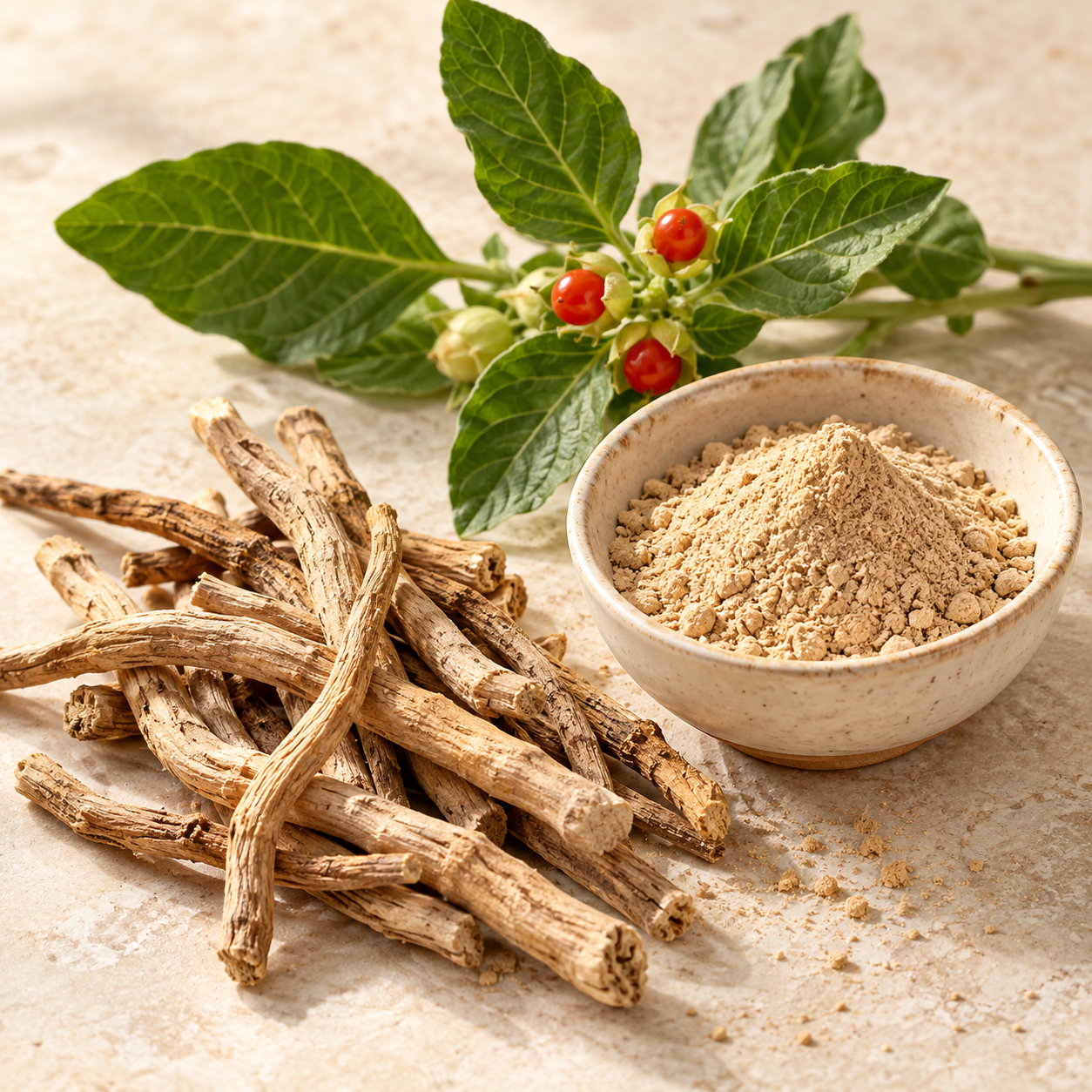
Ashwagandha appears in conversations about stress, sleep and traditional wellness. Those conversations often mix three different things: a long history of use, emerging scientific research and claims about individual products. Keeping them separate helps you make a more informed decision.
This guide explains the evidence and the questions to ask before considering ashwagandha powder. It is educational information, not a prescription or a promise of results. A herbal supplement deserves more careful consideration than an ordinary food topping.
What is ashwagandha?
Ashwagandha is the common name for Withania somnifera, a shrub used in traditional Ayurvedic and Unani systems. The root has a history of use, while modern preparations can contain root, leaf or extracts from both. The plant part matters because products do not all have the same chemical composition.
It is sometimes called an “adaptogen.” That word describes a proposed role in responding to stress; it does not prove that a product treats an anxiety disorder or is suitable for everyone. The NIH Office of Dietary Supplements overview explains the traditional background and differences between preparations.
What does research actually suggest?
Stress: promising findings, with important limits
Some short clinical trials report improvements in perceived stress with particular ashwagandha preparations. However, studies vary in their participants, products, measurements and duration. Findings from a selected group cannot establish what every user will experience.
The National Center for Complementary and Integrative Health notes that some preparations may help stress and insomnia, while evidence for anxiety remains unclear. Stress scores are not the same thing as a diagnosis or proof of a cure.
Sleep: a possible benefit, not a guarantee
A 2021 systematic review and meta-analysis of ashwagandha extracts and sleep found a small overall benefit across five randomised trials involving 400 participants. The authors called for further evidence, including better information about long-term safety.
That result supports further research, but it does not establish that an untested powder has the same effects as the extracts studied. Nor does it mean that persistent insomnia should be managed by buying a supplement without assessing its cause.
Broader wellness claims need greater caution
Do not treat ashwagandha as an established cure for diabetes, PCOS, infertility or anxiety. A change in a laboratory measure is not automatically a meaningful improvement in everyday health. Traditional use and an encouraging research headline are starting points for questions, not substitutes for clinical evidence.
Powder and extracts are not interchangeable
Golden Herbs lists Ashwagandha Powder in its catalog. This article does not imply that Golden Herbs sells capsules or standardised extracts, or that this powder has been used in the cited trials.
An extract concentrates selected components through processing. A powdered plant material is a different preparation. Even two extracts may differ in plant part, extraction method and withanolide content. A study’s milligram amount cannot simply be converted into a spoonful of another product.
The current online product description does not provide enough detail to verify a standardised withanolide level, extraction ratio or batch-testing programme. Ask for the current label and specifications rather than filling those gaps with assumptions.
Safety, side effects and interactions
According to NCCIH, possible side effects include drowsiness, stomach upset, diarrhoea and vomiting; rare liver injury has also been reported. Long-term safety remains uncertain. “Natural” does not mean free from side effects.
- Pregnancy and breastfeeding: avoid ashwagandha.
- Thyroid or autoimmune conditions: do not start it without medical advice; NCCIH does not recommend it for these groups.
- Upcoming surgery: tell the surgical team about supplement use.
- Medicines: potential interactions include sedatives, anticonvulsants, immunosuppressants, thyroid hormone, and medicines for blood pressure or diabetes.
- Hormone-sensitive prostate cancer: avoid use and discuss any supplement with your treating team.
People with liver disease should seek medical advice before considering use. Stop the product and obtain prompt medical assessment for possible liver symptoms such as yellowing of the eyes or skin, dark urine, marked itching or unusual abdominal discomfort. The NIH safety review discusses reported liver problems and thyroid effects.
If drowsiness occurs, do not drive or operate equipment. Do not stop or reduce prescribed medicines to make room for an herbal product. A pharmacist can help review the complete combination of prescriptions, over-the-counter medicines and supplements.
A practical product-quality checklist
Good information helps you assess a product; it does not guarantee that it will work. Before purchasing, look for clear answers to these questions:
- Does the label identify Withania somnifera and the plant part used?
- Is the product plain plant powder, an extract or a mixture?
- Are all ingredients and relevant allergens listed?
- Are serving instructions, warnings, storage advice and manufacturer details readable?
- If testing is claimed, is there a relevant report identifying the batch, laboratory and tests performed?
- If standardisation is claimed, is the measured constituent and amount specified?
A quality certificate and a clinical trial answer different questions. Identity or contaminant testing may help evaluate what is in a pack. It does not by itself demonstrate a benefit for stress or sleep. Likewise, a study about another preparation cannot establish the quality of this one.
You can browse the Golden Herbs herbal powder category or request product information from Golden Herbs. Medical suitability should be discussed with a qualified healthcare professional.
How to approach use responsibly
Begin with the reason you are considering it
Write down the concern you want help with and how it affects your day. Persistent tiredness, poor sleep or distress deserves assessment rather than an automatic supplement purchase. Bring the product label to the appointment so advice can address the actual formulation.
Agree on a plan, not an indefinite routine
If a clinician considers use appropriate, ask about the specific product, duration, monitoring and reasons to stop. This guide does not provide a universal dose: the catalog information and research do not justify one for every reader.
Follow verified product instructions alongside professional advice. Adding powder to a drink changes the way it is consumed, not its potential interactions. Do not add it to shared household food or assume it is suitable for children because it looks like a kitchen spice.
Keep a simple record
Record what you take, when you start, any unwanted effects and the review date agreed with your clinician. This makes later discussion more useful than relying on memory. If the label or seller cannot answer basic formulation questions, pause before starting.
Frequently asked questions
Is ashwagandha a sleeping pill?
No. It is a botanical ingredient with research on certain preparations. It should not be treated as interchangeable with a prescribed sleep medicine.
Can everyone take it every day?
No. Suitability depends on health conditions, medicines and the formulation, and long-term safety is not established. Routine use is not automatically appropriate.
Does a teaspoon of powder equal a study dose?
No. A spoon measures volume, and powder density varies. More importantly, whole powder and concentrated extracts are different products.
Can I take it with thyroid medication?
Do not start it without discussing it with the clinician managing your thyroid condition. Potential thyroid effects and interactions are a reason for caution.
Informed choices come before a wellness routine
Ashwagandha has a traditional background and some promising research, but product differences and safety questions matter. Read the label, ask for missing information and involve a qualified professional before deciding whether it belongs in your routine.
Golden Herbs’ approach starts with learning: Learn, Explore, Heal Naturally. In practice, that means curiosity paired with realistic expectations and appropriate care.